
It seems odd to criticise a country for delivering growth rates in standards of living and consumption that have been perhaps the fastest, longest, and most broad-based (affecting hundreds of millions of people) in history, points out Arvind Subramanian.

The government has retained Arvind Subramanian as its chief economic advisor, unlike other American professors Dr Raghuram Rajan and Arvind Panagariya, who quit their jobs as RBI governor and NITI deputy chairman respectively.

Twitter accounts of leading industrialist Ratan Tata and Trai chairman R S Sharma were also hacked

Subramanian Swamy caused a flutter when he sought Arvind Subramanian's sacking for allegedly taking anti-India stance when he was an IMF economist in Washington.

The outgoing Chief Economic Advisor will always be remembered for his remarkable passion, his large imprint on policymaking and the high level of public debate he fostered

Subramanian, a senior fellow at the Peterson Institute for International Economics in Washington, attended a news conference in New Delhi at which his appointment was announced.
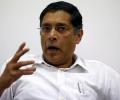
India is more insulated to Fed-related volatility than other emerging markets due to its better economic fundamentals

The inter-meeting rate cut by the Reserve Bank of India (RBI) indicates a shift in its monetary policy stance, the finance ministry's chief economic adviser Arvind Subramanian said on Thursday.
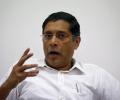
Two days after political commentator Pratap Bhanu Mehta resigned as a professor from the Ashoka University, his colleague, economist Arvind Subramanian, put in his papers on Thursday and faculty members wrote to the vice chancellor expressing their deep anguish.

Noted economist Arvind Subramanian is favoured as the choice for the government's Chief Economic Advisor (CEA).
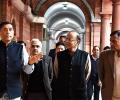
'The macro-economic stresses -- high interest rates, rupee depreciation and capital flows -- have receded now.' 'Interest rates have come down, inflation is down and the rupee has bounced back.' 'If oil prices continue at this level, there will be no vulnerability.' 'Growth is a different story.'

No need for extra stimulus, India to hit around 8 pct growth: adviser
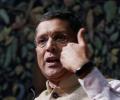
Subramanian was the Dennis Weatherstone Senior Fellow at the Peterson Institute for International Economics and Senior Fellow at the Centre for Global Development in the US before joining the ministry.

Subramanian's paper comes at a time when concerns have been raised in various quarters about the official economic growth numbers. The Economic Advisory Council-PM said the Base Year of India's income calculations were shifted to 2011-12 on the basis of recommendations of several committees with experts in national income accounting.
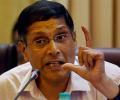
'In the short-term, the markets may be affected' by the review but 'it will help address what they are worried about which is why we need transparency,' says former chief economic advisor.
CEA offers three compelling arguments in his case for privatisation of government-owned banks.
The Reserve Bank of India is widely expected to lower interest rates for a third time this year.
He said the society has become highly litigious and vouched for independent regulatory institutions that are free from political interference.

RBI recently cut repo by 0.25 percentage point, taking the rate to 7.25 per cent in three reductions since January.
India's gross domestic product product (GDP) growth rate between 2011-12 and 2016-17 should be about 4.5 per cent instead of the official estimate of close to 7 per cent, he said in a research paper published at Harvard University. "The Indian policy automobile has been navigated with a faulty, possibly broken, speedometer," he says in the paper.

Arvind Subramanian was appointed CEA in October 2014 and got a year's extension in September 2017
Progress on the steps taken by Governor Shaktikanta Das' predecessor Urjit Patel to restore financial system integrity will be a key thing to assess any damage to the institution, Subramanian said.
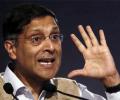
Says one of the problems in addressing the issue of black money is that India's tax system is perceived as being arbitrary

Make In India and the reduction in barriers of trade will potentially create a growth environment.

'We have to pull 80 million workers out of agriculture and go back to where we were in 2014. That itself is going to be a huge task.' 'We have already lost time, and that is a catastrophe impending.''

New data is puzzling as these aren't corroborated by other data
In his first interview since becoming the chief economic advisor, Arvind Subramanian agrees the Narendra Modi government has taken some initial steps to revive private investments but says many more measures would be required to restore macroeconomic stability - reining in inflation and fiscal deficit - and bring the economy back on high-growth path. Subramanian, who has earlier worked in the research department of the International Monetary Fund, tells IMF Survey, an online magazine of IMF, that the Gujarat model is to be replicated across India but there also are macroeconomic problems at the national level that need to be addressed.

Finding resources for a fiscal stimulus could be difficult and it could jeopardise macroeconomic stability, says CEA.

Chief economic advisor Arvind Subramanian discusses the Budget, goods and services tax, Centre-state relationship and larger issues facing the economy
Chief Economic Advisor Arvind Subramanian says that he hopes GDP growth will be at the upper end of the 7-7.5 per cent range.
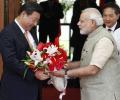
Arvind Subramanian talks about US and China's power play and where India figures in these dynamics.
Subramanian Swamy has been critical of Rajan for not lowering interest rates earlier to boost growth.

Mundane as it may seem, this is in some ways a metaphor for the challenges facing the nation, argue Arvind Subramanian and Devesh Kapur in their new book, A Sixth Of Humanity.

Chief Economic Advisor (CEA) K V Subramanian will be leaving the finance ministry and returning to academia on completion of his three-year term. The government had appointed Subramanian, an ISB Hyderabad professor, as the CEA in December 2018. He had succeeded Arvind Subramanian, who quit the position close to a year ahead of his extended tenure. Subramanian's three-year term would have come up for renewal in December but he decided to return to academia.

A PhD from Chicago-Booth and a top-ranking IIT-IIM alumnus, Krishnamurthy Subramanian is one of the world's leading experts in banking, corporate governance and economic policy

'But this Budget alone will not fix what ails the Indian economy.'
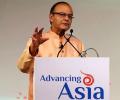
Earlier, maverick right-winger Subramanian Swamy had demanded the sacking of Jaitley's top aide

'Rates go up, revenues go up, and the need for compensation diminishes.'

The university in Haryana's Sonipat became the centre of a controversy earlier this week, when Mehta, who had resigned as its vice chancellor two years back, chose to step down as professor, saying that the founders made it "abundantly clear" that his association with the institution was a "political liability".

Swamy now wants Arvind Subramanian, one of the front runners for the post of the new RBI governor to be sacked.
